A statement of work (SOW) for a software project defines the objectives, scope and exclusions, deliverables with acceptance criteria, milestones, responsibilities on both sides, assumptions, change control, commercial model and payment triggers, ownership of code and accounts, and the handover. Describe required results rather than hours, make every deliverable checkable and have the final contract reviewed by a qualified professional.
What a statement of work does
A statement of work (SOW) defines the work a supplier will perform: objectives, deliverables, acceptance, schedule, responsibilities and how changes are handled. For software projects it is usually signed after a partner is chosen and attached to a master services agreement that holds the legal terms. This guide explains the content; it is not legal advice, so have the final contract reviewed by a qualified professional.
Where the SOW fits
The SOW comes last. It records what the chosen partner will deliver, based on the requirements and the proposal you accepted; anything missing from the earlier documents tends to return here as a change request.
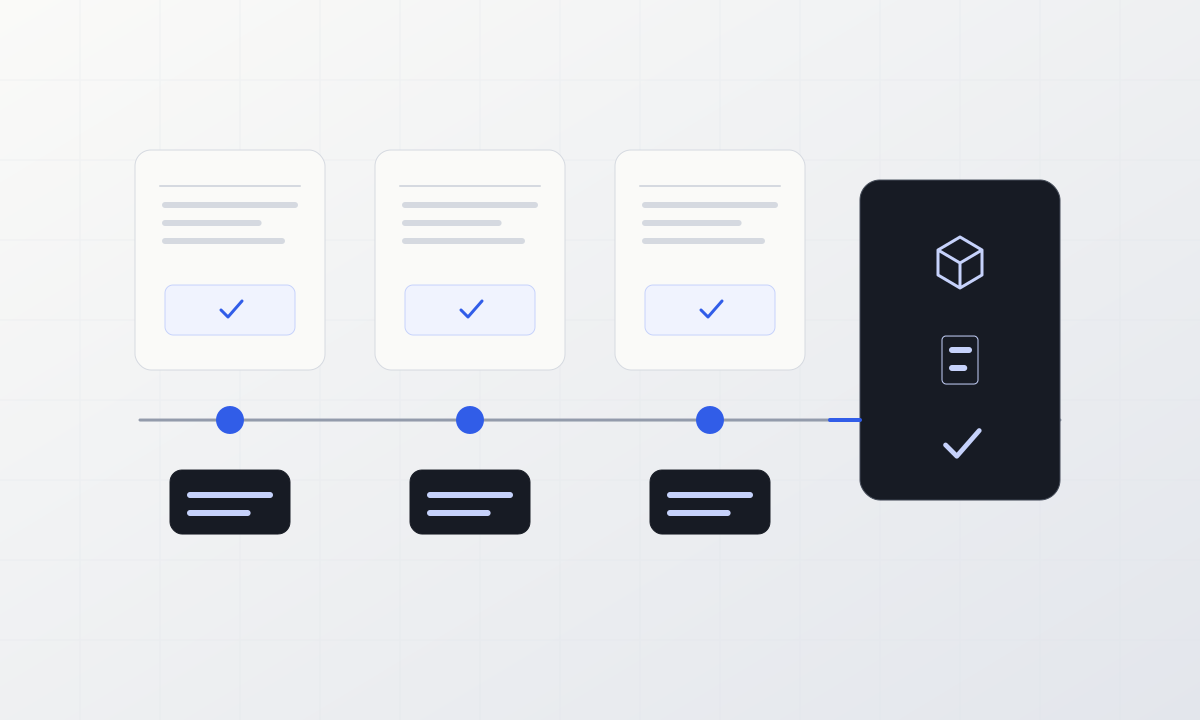
Each document answers one question, then hands its answer to the next.
Define what you need
- PRDProduct requirements document
What must the product do, and how will we know it works?
Hands onGoals, user stories and acceptance criteria
- SRSWhen precision mattersSoftware requirements specification
Exactly how must the system behave?
Hands onTestable, traceable requirements
Choose and agree
- CompareProposal comparison
Which offer is sound, not just cheapest?
Hands onA chosen partner and open risks
- SOWYou are hereStatement of work
What exactly have we agreed to deliver?
Hands onDeliverables, acceptance and change control
Describe results and acceptance, not hours
US federal acquisition rules ask agencies to describe work “in terms of the required results” rather than “how” it is to be done or “the number of hours to be provided”, and to allow assessment against “measurable performance standards” (FAR 37.602). The US Digital Service's TechFAR Hub applies the same principle to agile software contracts, describing “the work in terms of the results desired, as opposed to how the work should be done”. The same discipline helps any buyer: a deliverable is only useful in a SOW if both sides can tell when it has been accepted.
What to include in a software SOW
Each item answers a question that otherwise becomes a dispute later:
- Parties, dates and the agreement this SOW sits under.
- Objectives: the outcome the work supports.
- Scope and explicit exclusions.
- Deliverables, each with acceptance criteria and an acceptance owner.
- Milestones and the schedule, including your review time.
- Responsibilities on both sides: access, content, decisions and testing.
- Assumptions and dependencies that the plan relies on.
- Change control: how changes are requested, estimated and approved.
- Commercial model and payment triggers.
- Ownership of code, designs, accounts and data.
- Warranty, support and the handover at the end of the work.
Copy the statement of work template
This template covers the content of the work, not the legal terms; those usually sit in the master services agreement. Keep the language plain enough that both delivery teams can work from it day to day.
Match the SOW to the commercial model
A fixed-price SOW needs a tightly defined scope, because every change becomes a commercial negotiation. A time-and-materials SOW needs strong governance instead: a backlog, a regular review of progress against budget and a clear right to stop. Milestone-based payments can combine the two when each milestone has its own acceptance criteria. Choose the model that matches how certain the scope really is.
Write acceptance criteria that can be checked
“The booking feature works” cannot be accepted or rejected. “An invited customer can book an available slot, receives a confirmation email and the slot is no longer offered to others” can. Say who accepts each deliverable, how long they have to respond and what happens to defects found during acceptance.
Example deliverables with acceptance evidence
Each deliverable needs evidence that both sides accept as proof. This is a fictional planning example for a booking web application.
| Deliverable | Accepted when | Accepted by |
|---|---|---|
| Clickable prototype of the booking journey | Five target users complete a booking in moderated tests; findings are recorded | Product owner |
| Booking feature in a staging environment | The agreed acceptance cases pass; no open critical defects | Product owner and tester |
| Production release | Monitoring, backups and a rollback plan are demonstrated | Technical owner |
| Handover pack | The customer team deploys from its own repository using the documentation | Technical owner |
Adapt the deliverables and evidence to your project; the example sets no schedule or price.
Agree change control before it is needed
Most software projects change. Define how a change is requested, who estimates its effect on cost and schedule, who approves it and how approved changes are recorded. A simple, agreed change log prevents scope from drifting quietly and keeps the SOW an accurate description of the work.
Plan the handover at the start
List what you will receive when the work ends: source code in a repository you control, credentials and administrative access to every account, deployment instructions, documentation and the data. Agree a transition period if another team will take over. The legacy modernization guide shows how expensive a missing handover becomes years later.
Questions buyers ask
What is a statement of work in software development?
A statement of work (SOW) defines the work a supplier will perform: objectives, scope and exclusions, deliverables with acceptance criteria, milestones, responsibilities on both sides, change control, payment triggers and handover. It usually sits under a master services agreement that holds the legal terms.
What is the difference between a SOW and an MSA?
A master services agreement sets the legal relationship that applies to all work: liability, confidentiality, IP and dispute terms. Each statement of work then describes one specific piece of work under those terms. Have both reviewed by a qualified professional before signing.
Fixed price or time and materials: which is better?
Fixed price suits a tightly defined scope, because every change becomes a negotiation. Time and materials suits evolving scope but needs governance: a backlog, regular budget reviews and a clear right to stop. Milestone payments can combine the two when each milestone has its own acceptance criteria.
What makes a good acceptance criterion in a SOW?
One both sides can check without debate: a specific situation, the expected result and who accepts it. “The booking feature works” cannot be accepted or rejected; “a customer can book an available slot and receives a confirmation email” can.
Sources and editorial approach
Scopeivo publishes practical planning guidance. Examples and suggested rubrics are decision aids, not evidence of delivered projects or guaranteed outcomes. Adapt them to your context and verify material assumptions with the people responsible.
Read our research and publication approach. Original publication dates are retained; the update date reflects substantive changes to this guide.